
Armani Beck
Welcome!
Postdoctoral Fellow in Society of Fellows at Dartmouth College, Department of Sociology and WGSS
Ph.D. Sociology, Rutgers University- New Brunswick (2024)
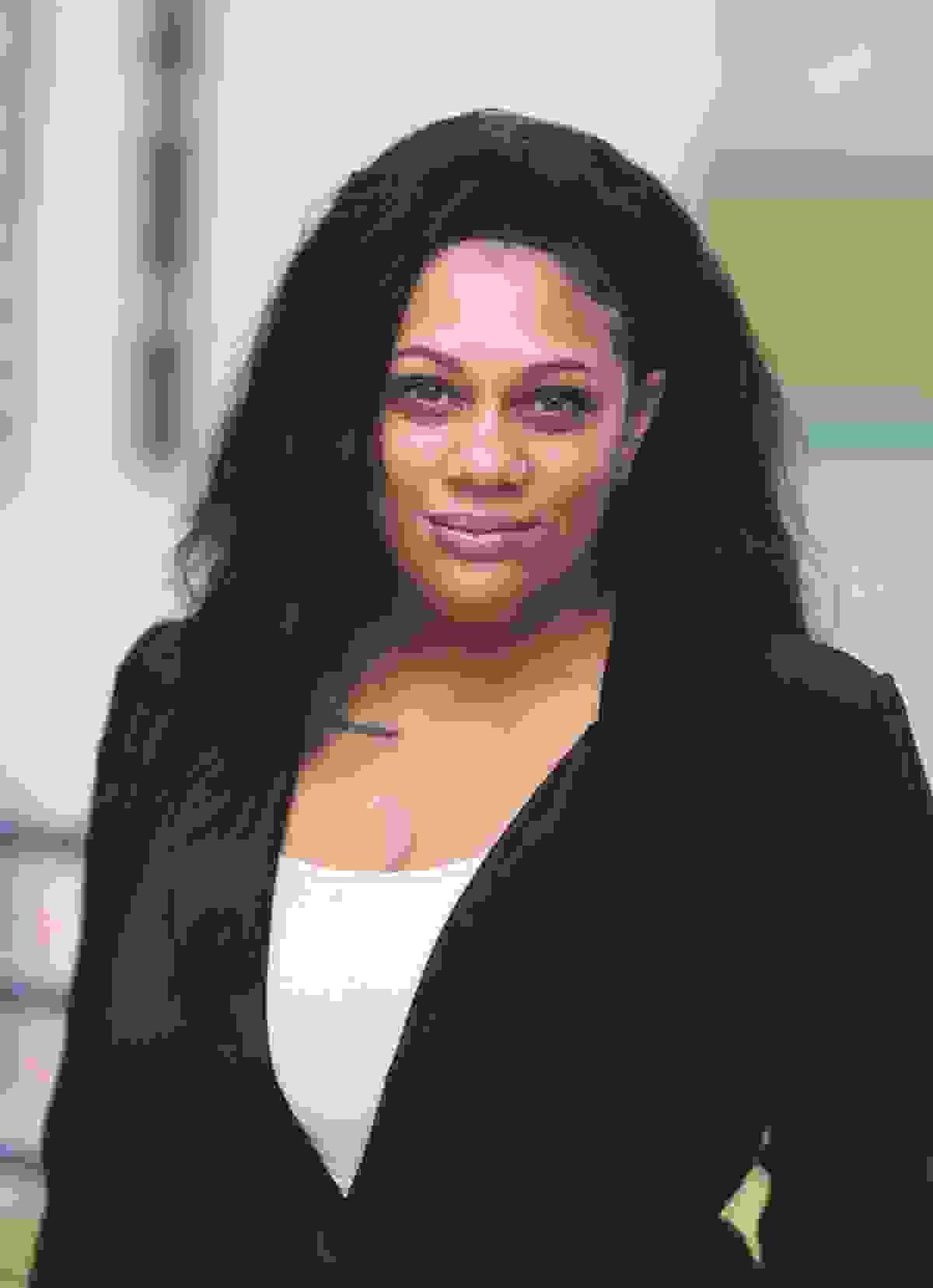
Armani Beck is a Society of Fellows postdoctoral fellow at Dartmouth College, where she holds a 3-year appointment housed in Dartmouth Sociology with an affiliation in Women's, Gender, and Sexuality Studies.
Armani is interested in the construction and maintenance of privilege and identity in contemporary American society, specifically in relation to race, gender, and sexuality. At present she is writing a book about transgender experiences of gaining, losing, and maintaining male privilege while navigating other systems of domination. Armani is extremely passionate about educating scholars in classes related to inequality and identity, specifically in courses related to race, gender and sexuality.
She has earned a B.A. in Psychology and a Certificate in Sexuality and Gender Studies from The Pennsylvania State University, University Park (2014), an M.Ed. in Human Sexuality from Widener University (2016), an M.A. in Sociology and a certificate in Women's, Gender, and Sexuality Studies from Rutgers University (2021), and a PhD in Sociology from Rutgers University (2024). Armani's dissertation, "'And now I have male privilege!': Trans Accounts of the Precarity of Privilege Maintenance” used interviews with transgender people to argue that while all men do benefit from some degree of male privilege, men also experience male privilege differently depending on their intersectional social positionality.
Armani is a researcher, educator, and a true believer in combining both for the purposes of creating a better society.
Interest Areas:
- Intersectionality
- Race
- Gender
- Sexuality
- Formal theory construction
- Qualitative methodology
Book Project:
Precarious Privilege: Transgender Accounts of Male Privilege and Intersectional Masculinity
*Under review at university press*
"Precarious Privilege:
Transgender Accounts of Male Privilege and Intersectional Masculinity"
Precarious Privilege connects sociological concepts of oppression, intersectionality, social markedness, and normativity to psychological concepts of stereotype threat, implicit bias, and schema to offer a fresh window into the “[socio]mental math” behind human interaction. Precarious Privilege employs a qualitative analysis of interviews with 30 transgender people who have experience being perceived as cisgender men and cisgender women to theorize not just the who and the what of male privilege, but also the when, the where, the how, and the why of male privilege. Because transgender people who pass have the unavoidable experience of being treated as men and as women in a sexist society, they have the awareness of privilege built into their experience, giving them attentional awareness to gender inequality that cisgender men and women cannot speak to. Despite the relatively symmetrical experiences of privilege that trans men gain and trans women lose, such as trans men feeling safer as men and trans women feeling less safe as women, the book also argues that male privilege is unstable and even harmful for those who are assumed to benefit from it in a way that is without downsides.
Precarious Privilege provides a highly sophisticated yet accessible analysis of male privilege as a process by debunking absolutist claims and showing that male privilege is real, but that it is also complex, precarious, and fluid.
Publications
Peer-reviewed Journal Article
Beck, Armani. (2024). “Mononormativity: The Social Elevation of the Singular”. Symbolic Interaction. https://doi.org/10.1002/symb.693
Book Manuscript in Progress
Beck, Armani. Precarious Privilege: Transgender Accounts of Male Privilege and Intersectional Masculinity. *Sample chapter and proposal under review at university press.*
Book Chapters
Beck, Armani. (2025). “Trans Men Navigating Male Privilege and the Complexities of Intersectional Identities.” In Interpreting Identity: Dimensions of Power, Presence, and Belonging. Edited by Wayne H. Brekhus and Susie Scott. Bristol, U.K. Bristol University Press.
Manuscripts in Progress
Beck, Armani. “Rats with Wings, America’s Most Wanted Dog: Pigeons, Pit Bulls, and the Mechanisms of Marginalization.”
Beck, Armani. "Gender, Sexuality, and Stigma Power: Reconceptualizing a Mechanism of Marginality.”
Beck, Armani. “Within-Person Interviewing: The Impact of Status Fluctuation on Noticing Normativity.”
Professional Conferences
2026
“Rats with Wings, America’s Most Wanted Dogs: Pigeons, Pit Bulls, and the Mechanisms of Marginalization”. American Sociological Association. New York.
“Humanist Sociology: Past, Present and Future”. Invited panelist. Society for the Study of Social Problems. New York.
“Precarious Privilege: Transgender Accounts of Male Privilege and Intersectional Masculinity”. Eastern Sociological Society. Washington D.C.
2025
“Pigeons, Pitbulls, and Post-Racism: ‘Othering’ as Management of Capitalist Excess”. Association for Humanist Sociology. Columbus, OH.
“Noticing Normativity: Within-Person Interviewing”. Association for Humanist Sociology. Columbus, OH.
“Microscopic Actors within Macroscopic Audiences”. ACT for Change: Harnessing Affect Control Theory to Solve Social Problems. Fairlee, Vermont.
2024
“Writing FOR those we write ABOUT: Transforming my Academic Dissertation into an Accessible Book”. Association for Humanist Sociology. Rochester, NY.
“Trans Men Navigating Male Privilege and the Complexities of Intersectional Identities”. Association of Black Sociologists. Montreal, Quebec.
“‘And Now I Have Male Privilege’: Transgender Accounts of the Precarity of Privilege”. Culture, Interaction, and the Psychosocial: Exploring the Intersections. Montreal, Quebec.
“Formal Properties of Passing: Directional Passing”. Eastern Sociological Society. Washington, D.C.
2023
“Mononormativity: The Social Elevation of the Singular”. American Sociological Association. Philadelphia, PA.
“Formal Properties of Passing: Directional Passing and Ambiguous Group Membership”. American Sociological Association. Philadelphia, PA.
2022
“ ‘And Now I Have Male Privilege:’ Stealth Transgender Accounts of the Precarity of Privilege”. American Sociological Association. Los Angeles, California.
“ ‘I Knew I was Being Gendered Female Because People Would Yell At Me:’ Transgender Women’s Accounts of the Precarity of Privilege”. Rutgers University Graduate Research Symposium. New Brunswick, NJ.
2021
“ ‘Assumptive Rights of Maleness:’ Stealth Transgender Men’s Accounts of [White] Male Privilege”. American Sociological Association. Virtual.
2019
“[White]-Male Privilege: Stealth Transgender Men’s Accounts of Inherited Privilege”. University of Central Oklahoma International Gender & Sexuality Studies Conference. Edmond, Oklahoma.
Teaching
Commitment, Innovation, Joy
In my classes I take seriously the goal of creating an inclusive classroom that promotes and encourages curiosity, intellectual engagement through the integration of diverse perspectives, and discovery among students through dismantling the false distinction between theory and practice. I am heavily influenced by social reconstructionism, critical theory, and humanism, and I work intensely to integrate principles from each into my classrooms. I am intentional about removing barriers to make my teaching open and accessible to students who are differently abled, and do this through creating lectures that are easily visible, visually engaging, and thoughtfully paced, as well as being mindful of barriers facing students with access issues by creating alternative assignments. I am actively aware that I have blindspots, and have sought out resources and workshops in my campus community to support my dedication to the goal of equitable pedagogy, including the Student Engagement Course Design Institute (2025) and the Student Accessibility Services Institute (2026) offered by Dartmouth College. In 2021, I won the Harry C. Bredemeier Award for Excellence in Undergraduate Teaching at Rutgers University- New Brunswick.
Courses Taught:
Dangerous Intersections: Intersectionality Beyond Boundaries; Sociology of Gender; Sociology of Sexuality; Race Relations; Gender Images in Media; Social Inequalities; Sociology of Mental Illness; Individual and Society; Expository Writing; College WritingDangerous Intersections: Intersectionality Beyond Boundaries
As an interpretative tool utilized across the social sciences and humanities, intersectionality interrogates how power is distributed along and across axes of inequality and privilege. Course readings, discussions, assignments, and assessments focus on a wide range of social locations connected to race, ethnicity, gender, class, sexuality, religion, language, and disability, while also accounting for the multiplicity, nuance, ambiguity, and contradictions in how these social identity markers intersect. Engaging both theoretical and empirical works, this course examines how simultaneous and interdependent dynamics between axes of inequality impact identity formation and life chances, relationships of marginality and privilege, social continuity, social conflict, and social change. Additionally, this course critically explores the challenges and advantages of intersectional analysis and the future of intersectionality’s theoretical, methodological, and epistemological capacities.
Sociology of Gender
Broadly speaking, sociology of gender is the study of the sources, maintenance, consequences, and changes of gender roles in society. This course, which pulls from cultural, social, political, economic, and psychological perspectives, uses an intersectional approach to deconstruct what it means to have a gender, and what it means to live in a gendered society. As a unit, we use an extremely critical lens to understand, critique, and unpack the gender binary, focusing heavily on the process of socialization and the impact that this socialization has on everyday interactions, decision making, concepts of self, general wellbeing, and overall understanding of the world around us.
Sociology of Sexuality
The sociology of sexuality is the study of the sources, maintenance, consequences, and changes of norms, roles, inequality, and identities in society related to sexuality. We begin by developing a working definition of sexuality- the difficulty we inevitably face in doing this trains our minds to nuance taken-for-granted definitions and concepts of sexuality moving forward. We then use an intersectional approach to deconstruct what it means to have a sexuality, and what it means to live in a “sex-centric” society. Most importantly, this course imprints upon its takers the reality that sexuality does not exist in a vacuum.
Race Relations
A sociological exploration into race and race relations includes an examination of the histories of race, racism, privilege, power, social inequalities, citizenship, subordination, and justice. In this class we focus on the historical and political forces that shape and construct recurring and changing patterns of race relations. In addition, we pay particular attention to the complex ways in which race and race relations mediates our everyday lived experiences by focusing on the ways by which it interacts and intersects with systems of gender, class, ethnicity, sexuality, citizenship, and other identities.
Gender Images in Media
Neither media nor gender exist in a vacuum. The way that we produce and consume media is heavily influenced by the way that we experience gender; conversely, the way that we experience gender is heavily influenced by the way that we produce and consume media! As a class, we use an extremely critical lens to understand, critique, and unpack how gender systems, and the gender binary specifically, are maintained and imposed. We focus heavily on identifying and analyzing stereotypes and the impact that these have on ourselves and others. This course pulls from cultural, sociological, political, economic, and psychological perspectives.
Sociology of Mental Illness
What is normality? What does it mean to be mentally ill, and what does it mean to be mentally healthy? What factors cause a society’s understanding of “normality” to shift? Which stereotypes contribute to the overdiagnosing of some groups, and the lack of diagnoses for others? Where do mentally ill people “belong,” and how is this shaped by capitalism, pharmaceuticalization, and moral panic? These are the types of questions we answer in this course. Because mental illness is typically understood as a topic of biological and psychological interest, the social influences on the construction and maintenance of our understanding of mental illness are often ignored, neglected, and taken for granted. In order to do justice to this topic it is crucial that we examine mental health in the scope of sexism, racism, heterosexism/homophobia, cissexism/transphobia, classism, ableism, sizeism, and social norms of respectability.
Individual & Society
The compulsive need to be both exceptional and mundane. The tensions between identity and identification. What does it mean to identify as a member of a group that is socially constructed? Are there any groups that are not socially constructed? These are the types of questions and musings we mull over in Individual and Society. This course explores sociology’s contributions to our understanding of the relations between the personal and the social with a heavy emphasis on the overlapping fields of sociology, psychology, and sociological social psychology.
Expository Writing
Expository Writing is the required writing course for all undergraduate students at Rutgers University- New Brunswick. In this course, students read and write about a variety of texts concerning a range of fascinating contemporary issues. By completing a series of essay assignments – each of which involves peer review and revision – students learn to read critically, analyze textual evidence, structure complex ideas, and develop independent arguments by making original claims that contribute to ongoing intellectual conversations. While Expository Writing trains students in critical thought, particularly as it occurs in and through the practice of writing, the class does more than prepare students to compose coherent essays. The class also encourages students to imagine themselves as having a role to play in thinking through the kinds of complex, open-ended questions that characterize our public life – and to think of slow, deliberate reading; lively discussion; and careful written analysis as invaluable ways of taking up that challenge.
Contact
Leave a message or email me for inquiries.

Thank you for coming to my website!